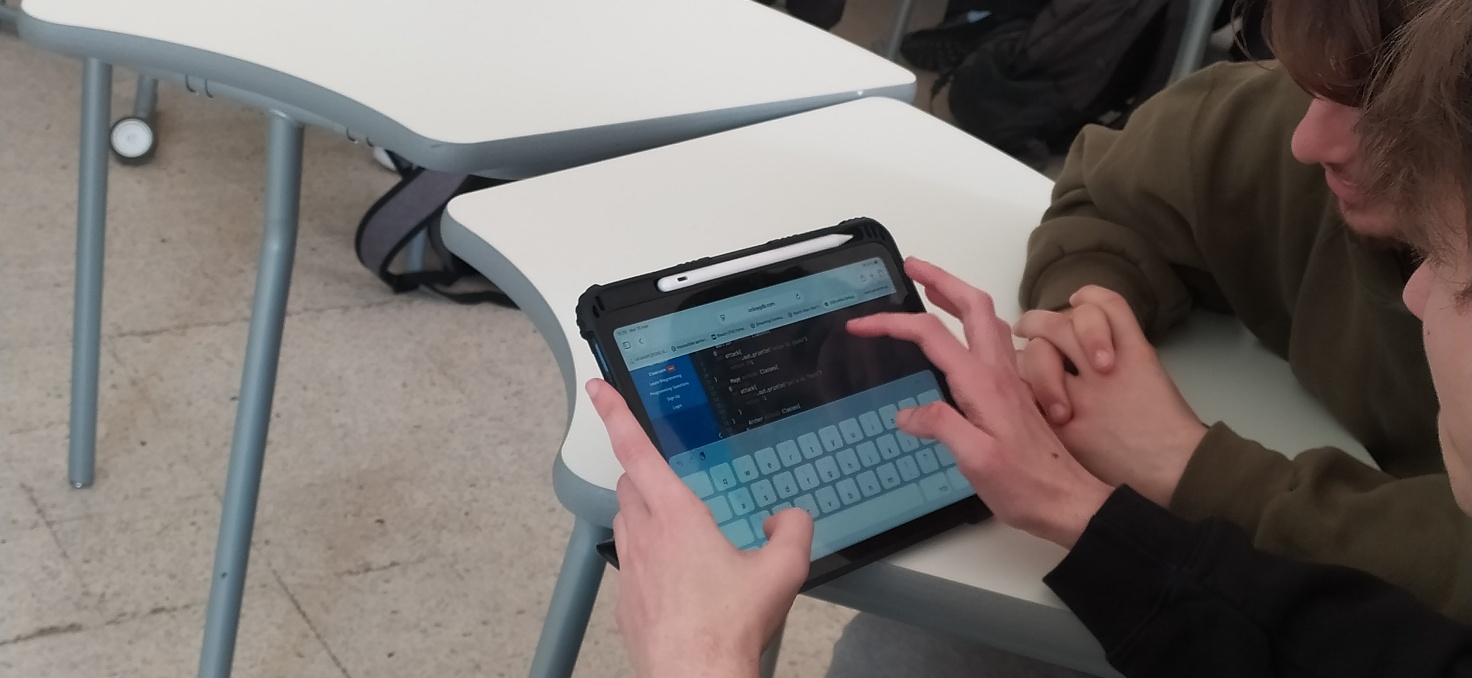
A lesson does not always need to begin with a source supplied by the teacher. Starting with student knowledge can reveal what the group already understands, which examples matter to them and where misconceptions or gaps exist.
AI is useful after that first collection. It can organise many ideas into themes, produce a shared summary and suggest questions for further research. Used in this order, it supports student voice instead of replacing it.
Collect first, generate second
If AI produces the initial list, students may spend the lesson reacting to someone else's structure. If students brainstorm first, the generated summary reflects their starting point. They can then check whether it represents their ideas accurately and decide what is missing.
This review is itself a CLIL task. Students compare, classify, question and refine subject content through English. The summary is a working document, not the final answer.
Classroom example: AI in daily life
Students in class 4 CINF began by listing applications and benefits of AI from their own experience. The application organised the pooled ideas into a shared English summary. The class used it to identify areas that needed more research.
Groups selected one aspect, produced a short report and converted it into a podcast of up to ten minutes. The teacher required a dialogue rather than a read-aloud report. Students had to ask questions, agree, disagree, manage turns and explain technical ideas in real time.
The structure was later reused in classes 5 CINF and 5 DINF for Starlink, in-vehicle LAN, Galileo for GPS, PAN, Neuralink and quantum internet. Each group researched one technology and created a dialogue-style podcast across three 50-minute sessions.
Why the podcast format matters
A written report can be divided into separate sections and read aloud with little interaction. A technical dialogue requires students to respond to one another. They need language for clarification, agreement, qualification and turn-taking as well as the vocabulary of the topic.
AI can draft sentence frames and interview questions, but students should select and adapt them. A podcast becomes more convincing when speakers have genuine information to exchange and positions to discuss, rather than a generated script to perform.
A reusable six-step sequence
- Students brainstorm individually before seeing AI output.
- The class pools and checks the ideas.
- AI organises them into a draft summary.
- Students identify gaps and research one area in groups.
- Groups convert findings into questions, explanations and responses.
- They record a dialogue and review both subject accuracy and communication.
In the podcast case, students began with their own examples of AI, used the application to organise the shared material and then had to negotiate turns, ask for clarification and respond in real time.